Maintenance
Seasonal Pool Opening Checklist
Get your pool ready for summer with this comprehensive step-by-step guide to opening your pool.
By Pool BaseMarch 10, 202314 min read
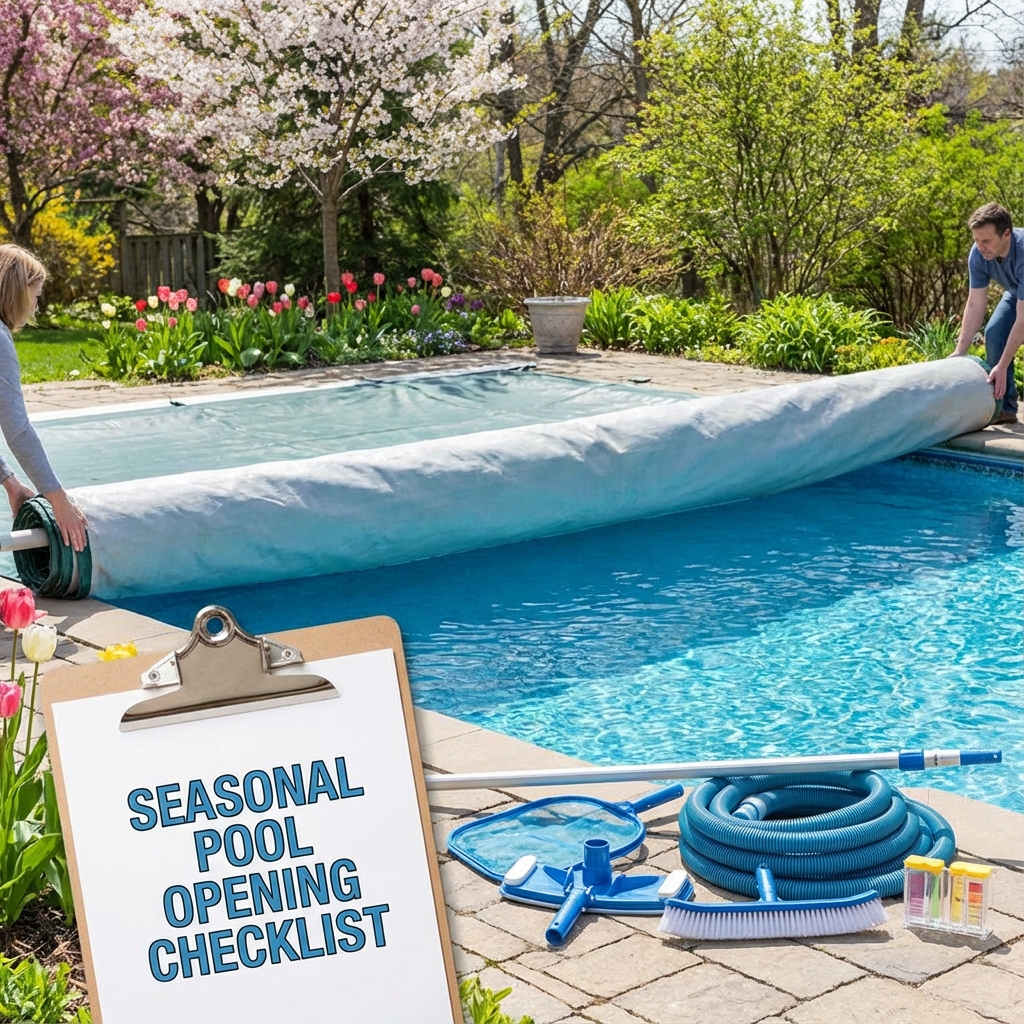
Opening your pool for the swimming season is an exciting time, but it can also be daunting if you're not properly prepared. This comprehensive checklist will guide you through the process step by step, ensuring you don't miss anything important as you prepare for a summer of swimming enjoyment.
Before You Begin: Gather Your Supplies
Before removing the cover, make sure you have all necessary supplies on hand:
- Pool chemical testing kit
- Opening chemical kit (shock, algaecide, stain & scale preventative)
- Chlorine or alternative sanitizer
- pH increaser/decreaser
- Alkalinity increaser
- Pool brush
- Telescoping pole
- Vacuum head and hose
- Skimmer net
- Filter cleaning supplies
- Pool cover cleaner
- Garden hose
- Clean, empty storage containers
- Pool cover pump (if needed)
- Lubricant for O-rings and gaskets
Step 1: Remove and Clean the Pool Cover
Removing the cover properly is crucial to prevent debris from entering your pool.
- Remove debris from the cover before removing it from the pool
- Pump off any standing water using a cover pump or siphon
- Remove the cover carefully with help from another person
- Clean the cover thoroughly using manufacturer-recommended cleaners
- Allow the cover to dry completely before storing
- Store in a clean, dry location away from direct sunlight and pests
Step 2: Clean Pool Deck and Surrounding Area
Cleaning around your pool helps prevent debris from entering the water.
- Sweep or blow debris away from the pool area
- Wash down the deck with appropriate cleaner
- Trim overhanging trees or bushes that might drop debris into the pool
- Clean or replace deck furniture before placing near the pool
Step 3: Reinstall Pool Equipment
Now it's time to get your pool equipment ready for the season.
- Reinstall deck equipment such as ladders, rails, and diving boards
- Lubricate all O-rings and gaskets with pool lubricant
- Replace drain plugs on pump, filter, and heater
- Reconnect all plumbing lines that were disconnected for winter
- Install pressure gauge and other removable equipment
- Reattach return jet fittings and skimmer baskets
Step 4: Inspect Equipment and Systems
Before filling or starting your pool, inspect all systems for potential issues.
- Check for cracks or damage in equipment housings
- Inspect electrical components for rust, damage, or wear
- Examine all hoses and pipes for cracks or brittleness
- Test pool automation systems if applicable
- Check heater for nests or debris that may have accumulated over winter
- Look for wear on O-rings and gaskets and replace if necessary
Step 5: Fill and Start the Pool System
Now you're ready to fill the pool and start the circulation system.
- Fill pool to middle of the skimmer opening using fresh water
- Prime the pump following manufacturer instructions
- Start the circulation system and check for proper operation
- Look for leaks throughout the system
- Check pressure gauge readings to ensure they're in normal range
- Backwash or clean the filter if pressure is high
Step 6: Clean the Pool
With the water circulating, you can begin cleaning the pool.
- Brush all pool surfaces thoroughly including walls, steps, and floor
- Skim surface debris with a net
- Vacuum the pool to remove settled debris
- Clean the waterline with an appropriate cleaner
- Run the filter continuously for 24-48 hours
Step 7: Test and Balance Water Chemistry
Proper water chemistry is crucial for a safe, clean pool.
- Test the water for pH, alkalinity, hardness, and stabilizer
- Adjust alkalinity first (ideal range 80-120 ppm)
- Balance pH next (ideal range 7.4-7.6)
- Test calcium hardness and adjust if needed (ideal range 200-400 ppm)
- Check cyanuric acid level (ideal range 30-50 ppm)
- Shock the pool following product instructions
- Add algaecide as a preventative measure
- Continue running filter for 24 hours after chemicals are added
Step 8: Set Up Regular Maintenance Schedule
Once your pool is open, establish a regular maintenance routine.
- Set a weekly testing schedule for water chemistry
- Create a cleaning routine for skimming, brushing and vacuuming
- Schedule backwashing or filter cleaning based on pressure readings
- Plan for regular shock treatments every 1-2 weeks
- Establish a record-keeping system for chemical additions and maintenance
Special Considerations by Pool Type
For Vinyl Liner Pools
- Check for tears or wrinkles in the liner
- Be gentle when brushing to avoid damage
- Use vinyl-safe chemicals and cleaning products
For Fiberglass Pools
- Check for cracks or bubbles in the gel coat
- Clean waterline with non-abrasive cleaners
- Maintain water chemistry carefully to protect finish
For Concrete/Gunite Pools
- Inspect for cracks or surface damage
- Brush more aggressively to remove algae and stains
- Check for calcium scaling on surfaces
Troubleshooting Common Opening Issues
Green or Cloudy Water
- Shock at a higher level
- Run filter continuously
- Test and balance chemistry
- Consider additional algaecide
Equipment Not Starting
- Check breakers and power supply
- Ensure valves are in correct positions
- Check for air locks in system
- Prime pump if necessary
Low Water Flow
- Clean skimmer and pump baskets
- Backwash or clean filter
- Check for air leaks
- Inspect impeller for debris
Conclusion
Opening your pool properly sets the stage for a trouble-free swimming season. By following this detailed checklist, you'll ensure that no important steps are missed and your pool will be ready for swimmers quickly and safely. Remember that patience is key—rushing through the opening process can lead to problems that are difficult to correct later in the season.
- Pool Opening
- Seasonal Maintenance
- Checklist
- Spring