Maintenance
Complete Guide to Commercial Pool Maintenance
Comprehensive strategies for maintaining commercial pools efficiently, ensuring safety standards, and optimizing chemical usage while minimizing maintenance costs.
By Pool BaseJune 12, 202315 min read
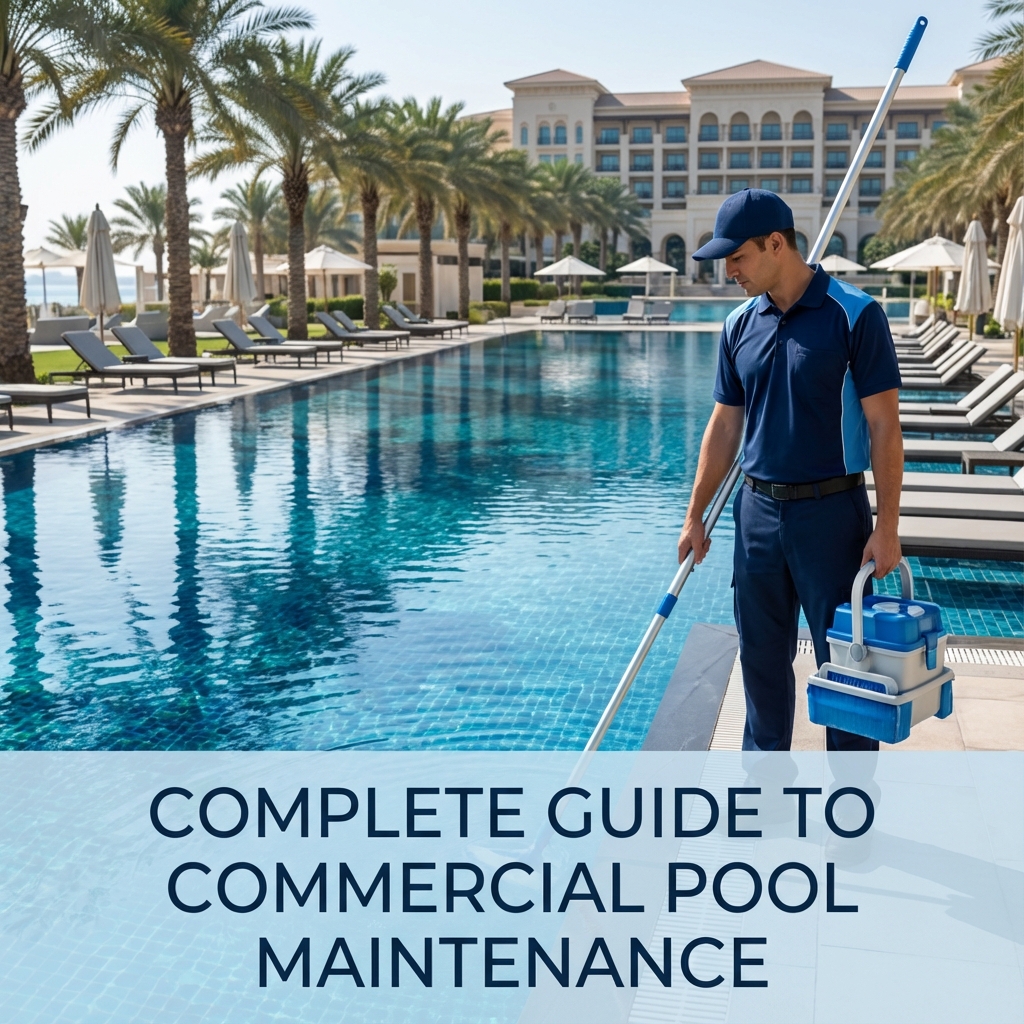
Maintaining a commercial pool requires a different approach compared to residential pools. The higher bather load, extended operating hours, and stricter health regulations all contribute to a more complex maintenance regimen. This comprehensive guide will help commercial pool managers establish efficient maintenance routines while optimizing chemical usage and minimizing costs.
Establishing a Maintenance Schedule
The foundation of effective commercial pool maintenance is a well-structured schedule. Here's a recommended framework:
Daily Tasks
- Check and adjust water chemistry (pH, chlorine, alkalinity)
- Empty skimmer and pump baskets
- Clean tile line
- Inspect equipment for proper operation
- Record chemical readings and water clarity
- Backwash filter if pressure gauge indicates
Weekly Tasks
- Thoroughly brush walls and floors
- Vacuum the entire pool
- Clean deck areas and furniture
- Perform comprehensive water testing
- Shock the pool (preferably overnight)
Monthly Tasks
- Deep clean filters
- Check and clean salt cells (if applicable)
- Inspect all safety equipment
- Clean pool cover (if applicable)
- Test cyanuric acid and calcium hardness levels
Optimizing Chemical Usage
Commercial pools can consume significant amounts of chemicals, making optimization crucial for cost management:
- Use a chemical controller: Automated systems maintain consistent chemical levels and prevent over-treatment.
- Consider salt chlorination: While initial investment is higher, long-term chemical costs are lower and water quality often improves.
- Implement UV treatment: UV systems reduce chlorine demand by up to 70% while providing additional sanitation.
- Practice proper backwashing: Only backwash when necessary (based on pressure readings) to minimize water and chemical loss.
Health and Safety Compliance
Commercial pool operators must stay compliant with health regulations:
- Maintain accurate daily logs of water chemistry readings
- Document all maintenance procedures and chemical additions
- Train staff in proper handling of pool chemicals
- Keep safety equipment in excellent condition and easily accessible
- Schedule regular inspections with local health authorities
Energy Efficiency Measures
Reducing energy consumption provides significant cost savings:
- Install variable speed pumps for circulation
- Use pool covers when the pool is closed
- Optimize heating schedules and temperatures
- Consider solar heating options where practical
- Ensure proper insulation of heating equipment
Troubleshooting Common Issues
Cloudy Water
- Check filtration system efficiency
- Verify proper chlorine levels
- Test for proper pH and alkalinity
- Consider using a clarifier or flocculant
- Check for adequate circulation
Algae Growth
- Shock the pool with appropriate chlorine levels
- Brush all surfaces thoroughly
- Run filtration system continuously
- Use algaecide as directed
- Consider causes (poor circulation, inadequate sanitizer)
Equipment Failures
- Implement preventative maintenance schedules
- Keep spare parts for critical components on hand
- Establish relationships with reliable service providers
- Train staff to recognize warning signs of equipment issues
Conclusion
Commercial pool maintenance requires diligence, knowledge, and a systematic approach. By establishing clear routines, optimizing chemical usage, ensuring regulatory compliance, and focusing on energy efficiency, pool operators can maintain excellent water quality while managing costs effectively.
Remember that proper training of all staff members involved in pool maintenance is essential. A well-maintained commercial pool not only provides a safe and enjoyable environment for users but also protects your investment and enhances your facility's reputation.
- Commercial Pools
- Maintenance
- Water Chemistry
- Efficiency