Chemicals
The Ultimate Guide to Balancing Your Pool Chemistry
Learn how to properly balance pH, alkalinity, and chlorine levels for a safe and clean swimming environment.
By Pool BaseMay 15, 202312 min read
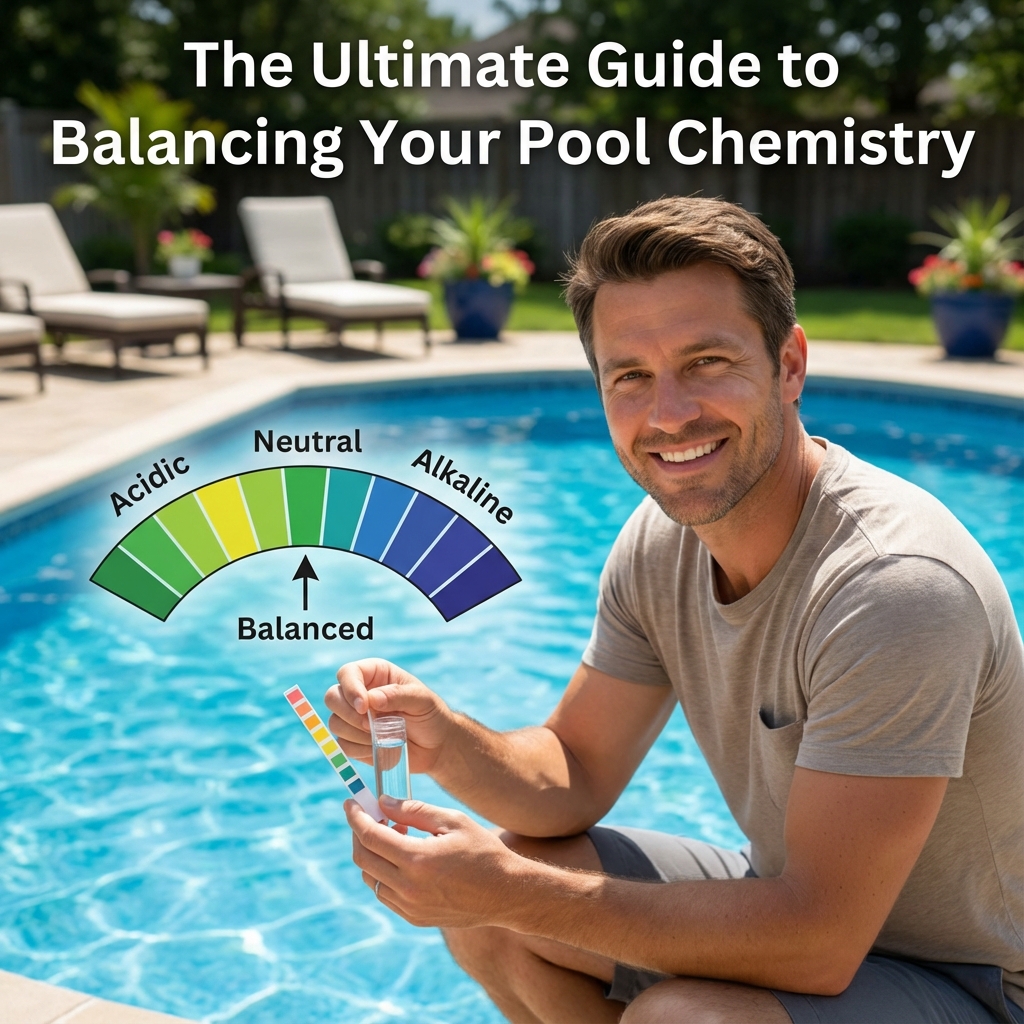
Perfect pool water doesn't happen by accident. Behind every crystal-clear swimming pool is a carefully maintained balance of chemicals. This guide will walk you through the essentials of pool chemistry, providing you with the knowledge to maintain safe, clean, and inviting pool water all season long.
Why Pool Chemistry Matters
Proper chemical balance in your pool is crucial for several reasons:
- Swimmer comfort and safety: Improperly balanced water can cause skin and eye irritation
- Equipment protection: Unbalanced chemistry can damage pool equipment, surfaces, and fixtures
- Water clarity: The right chemical balance keeps your water sparkling clear
- Efficient sanitization: Proper chemistry allows sanitizers to work effectively
The Key Parameters to Monitor
pH Level (7.2 - 7.8)
The pH level measures how acidic or basic your pool water is on a scale of 0-14.
- Too low (acidic): Can cause eye/skin irritation, corrosion of equipment, and rapid dissipation of chlorine
- Too high (basic): Leads to cloudy water, scale formation, reduced sanitizer effectiveness, and skin/eye irritation
- Ideal range: 7.4-7.6 (similar to human tears)
Adjusting pH:
- To increase pH: Add sodium carbonate (soda ash)
- To decrease pH: Add sodium bisulfate (dry acid) or muriatic acid
Total Alkalinity (80 - 120 ppm)
Total alkalinity acts as a buffer for pH, preventing rapid fluctuations.
- Too low: Results in pH bounce, corrosion, staining, and irritation
- Too high: Causes cloudy water, scale formation, and makes pH adjustment difficult
- Ideal range: 80-120 ppm
Adjusting Total Alkalinity:
- To increase: Add sodium bicarbonate (baking soda)
- To decrease: Add muriatic acid or sodium bisulfate (carefully, as this will also lower pH)
Chlorine Levels
Chlorine is your primary sanitizer, killing bacteria and other contaminants.
- Free Chlorine: The active form of chlorine available to sanitize (1-3 ppm ideal)
- Combined Chlorine: Chlorine that has attached to contaminants (should be less than 0.5 ppm)
- Total Chlorine: Sum of free and combined chlorine
Adjusting Chlorine:
- To increase: Add chlorine tablets, liquid chlorine, or shock treatment
- To decrease: Allow sunlight exposure or use a chlorine neutralizer (rarely necessary)
Calcium Hardness (200 - 400 ppm)
Calcium hardness measures the amount of dissolved calcium in your water.
- Too low: Can lead to corrosive water that damages pool surfaces
- Too high: Leads to scaling and cloudy water
- Ideal range: 200-400 ppm (vinyl pools can be lower)
Adjusting Calcium Hardness:
- To increase: Add calcium chloride
- To decrease: Partially drain and dilute with fresh water
Stabilizer/Cyanuric Acid (30 - 50 ppm)
Cyanuric acid protects chlorine from being quickly broken down by sunlight.
- Too low: Results in rapid chlorine loss due to sun exposure
- Too high: Causes "chlorine lock," reducing sanitizer effectiveness
- Ideal range: 30-50 ppm
Adjusting Cyanuric Acid:
- To increase: Add cyanuric acid or use stabilized chlorine products
- To decrease: Partially drain and refill with fresh water
The Balanced Water Approach
Rather than treating each parameter separately, successful pool maintenance requires understanding how these chemicals interact. Follow this sequence when balancing your pool:
- Adjust Total Alkalinity first: This provides a stable base for pH adjustments
- Balance pH second: Once alkalinity is in range, adjust pH
- Set sanitizer levels: After pH is balanced, focus on maintaining proper chlorine levels
- Adjust calcium hardness and stabilizer: These typically don't change rapidly and can be adjusted less frequently
Testing Water Chemistry
Regular testing is essential for proper maintenance:
- Test strips: Quick and simple, but less accurate
- Liquid test kits: More precise and comprehensive testing
- Digital testers: High accuracy but more expensive
- Professional testing: Most pool stores offer detailed water analysis
Testing schedule:
- Test pH and chlorine 2-3 times per week
- Test alkalinity weekly
- Test calcium hardness and stabilizer monthly
Common Problems and Solutions
Cloudy Water
- Check filtration system
- Verify proper chlorine levels
- Test for proper pH and alkalinity
- Consider using a clarifier
- Shock the pool if necessary
Green Water
- Shock with high levels of chlorine
- Brush pool surfaces thoroughly
- Run filter continuously
- Add algaecide if needed
- Maintain proper sanitizer levels to prevent recurrence
Scaling
- Balance pH and alkalinity
- Adjust calcium hardness
- Use scale inhibitors
- Brush affected areas
Conclusion
Maintaining proper pool chemistry doesn't have to be complicated. By regularly testing your water and understanding how different chemical parameters interact, you'll be able to keep your pool water clear, comfortable, and safe. Remember that consistency is key—small, regular adjustments are better than major corrections that can throw your pool chemistry out of balance.
- Water Chemistry
- pH
- Chlorine
- Pool Maintenance