Equipment
Choosing the Right Automatic Pool Cleaner
Compare different types of pool cleaners and find out which one is best for your specific pool needs.
By Pool BaseFebruary 28, 202311 min read
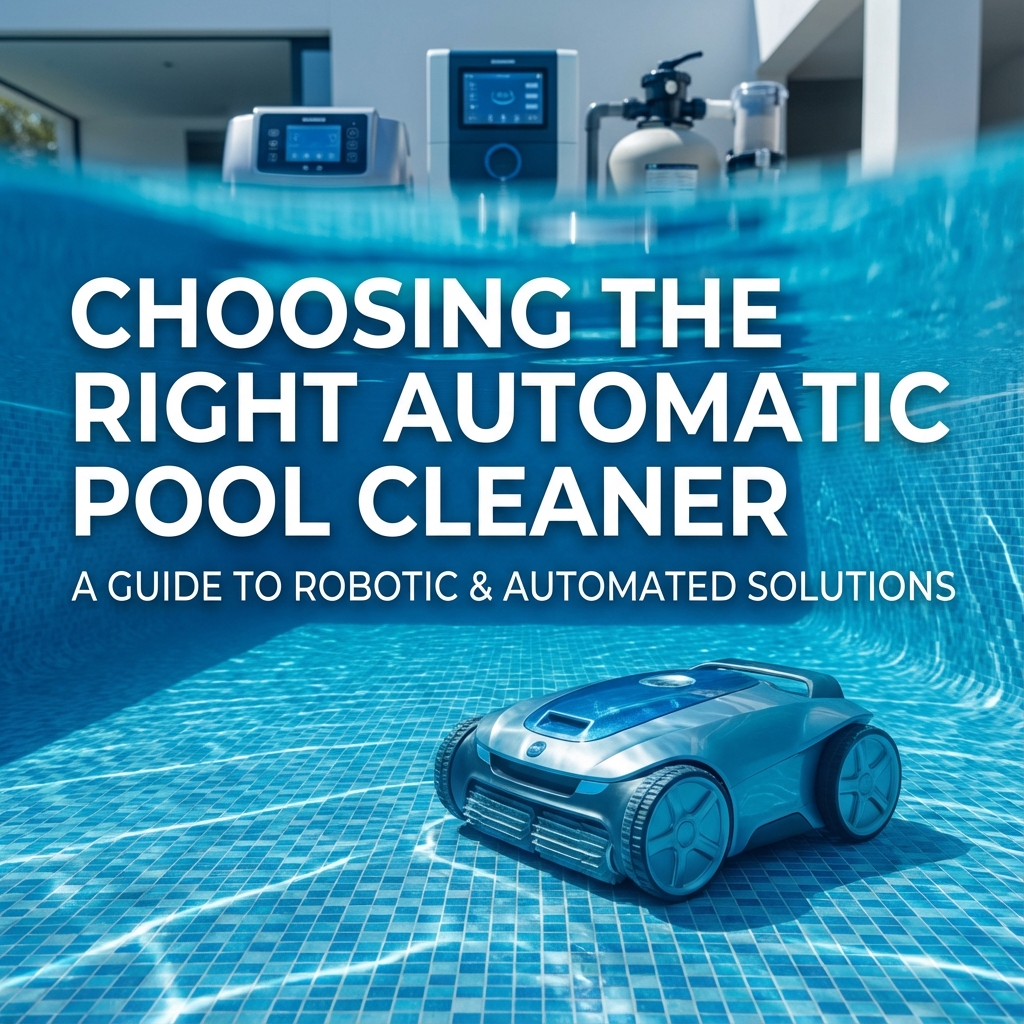
Keeping your pool clean is essential for safe, enjoyable swimming, but manual cleaning can be time-consuming. Automatic pool cleaners offer a convenient solution, but with so many options available, selecting the right one for your specific needs can be challenging. This guide will help you understand the different types of automatic pool cleaners and how to choose the best one for your pool.
Types of Automatic Pool Cleaners
There are three main categories of automatic pool cleaners, each with distinct advantages and limitations:
1. Suction-Side Cleaners
How they work: Connect to your pool's skimmer or dedicated suction line and use the suction from your filtration system to move around and collect debris.
Advantages:
- Most affordable option (typically $200-$500)
- Relatively simple operation with few moving parts
- Good for removing small to medium-sized debris
- Easy to install and maintain
Disadvantages:
- Puts additional strain on your pool pump and filter
- Not ideal for large debris like leaves
- May require frequent emptying of filter basket
- Less effective in pools with poor circulation
Best for:
- Smaller pools with light to moderate debris
- Pools with vinyl or fiberglass surfaces
- Budget-conscious pool owners
- Pools that don't collect large debris
2. Pressure-Side Cleaners
How they work: Connect to your return jet (or dedicated pressure line) and use water pressure to move around the pool, collecting debris in an attached bag.
Advantages:
- Effective for collecting larger debris like leaves
- Don't burden your filtration system
- Can help circulate water in the pool
- Generally faster than suction cleaners
- Dedicated collection bag reduces filter cleaning frequency
Disadvantages:
- More expensive than suction cleaners ($400-$800)
- May require a booster pump (additional cost)
- Collection bags need regular emptying
- More moving parts to maintain
Best for:
- Pools with trees nearby that drop leaves
- Medium to large pools
- Pools with concrete or gunite surfaces
- Areas with higher debris levels
3. Robotic Cleaners
How they work: Self-contained units with their own filtration system and propulsion. They plug into a standard electrical outlet and operate independently from your pool system.
Advantages:
- Most effective cleaning performance
- Clean walls and steps as well as floor
- Don't use your pool's filtration system
- Many have smart features like programming and remote control
- Energy efficient operation
- Finest filtration capability
Disadvantages:
- Most expensive option ($600-$1,500+)
- Require electricity at the pool
- Heavier to remove from pool
- Higher repair costs if they malfunction
Best for:
- Pools where cleaning quality is a priority
- Pools with complex shapes or features
- Pool owners wanting minimal maintenance
- Large pools that take a long time to clean manually
Selecting the Right Cleaner for Your Pool Type
Vinyl Liner Pools
Vinyl liners can be punctured or damaged by aggressive cleaners, so choose models specifically designed for vinyl pools:
- Best options: Gentle suction-side cleaners or specialized robotic cleaners
- Features to look for: Soft bristles, rubber wheels, lightweight design
Concrete/Gunite Pools
These durable surfaces can handle more aggressive cleaning:
- Best options: Any type, but pressure-side and robotic cleaners excel
- Features to look for: Strong climbing ability, scrubbing brushes for walls
Fiberglass Pools
Similar to vinyl, fiberglass benefits from gentler cleaning approaches:
- Best options: Suction-side or robotic cleaners with appropriate wheels
- Features to look for: Non-marking wheels, adequate suction without being too strong
Factors to Consider When Choosing
Pool Size and Shape
- Small pools (under 20,000 gallons): Any cleaner type will work, but suction cleaners are cost-effective
- Medium pools (20,000-40,000 gallons): Pressure-side or robotic for better efficiency
- Large pools (over 40,000 gallons): Robotic cleaners for best coverage and efficiency
- Complex shapes with tight corners: Robotic cleaners navigate best
- Pools with steps or beach entries: Look for cleaners specifically designed to handle these features
Type and Amount of Debris
- Mainly dirt and small debris: Suction cleaners work well
- Leaves and larger debris: Pressure-side or robotic with large collection capacity
- Fine particles and algae: Robotic cleaners with fine filtration
- Sandy areas: Look for cleaners with sand-specific filtration capabilities
Budget Considerations
Beyond the initial purchase price, consider:
- Energy costs: Robotic cleaners are most efficient
- Replacement parts: Check availability and cost
- Maintenance requirements: More complex cleaners may require professional service
- Longevity: Higher quality cleaners may cost more initially but last longer
Existing Pool Equipment
- Powerful pump: Can efficiently run a suction-side cleaner
- Weak or variable-speed pump: May be better suited to pressure-side or robotic cleaner
- Already have a booster pump: Makes pressure-side cleaners more economical
- No nearby electrical outlet: Limits robotic cleaner options
Popular Features Worth Considering
Smart Technology
Many modern cleaners, particularly robotics, offer advanced features:
- Programmable cleaning schedules
- Remote control operation via smartphone apps
- Cleaning pattern customization
- Self-learning capabilities to optimize cleaning routes
Climbing Ability
Not all cleaners can effectively clean walls and waterline:
- Basic suction cleaners typically clean floors only
- Advanced pressure and robotic models can climb walls
- Some premium models clean stairs and waterline
Filtration Efficiency
Consider the cleaner's ability to filter different sizes of debris:
- Micron rating indicates filtration fineness (lower number = finer filtration)
- Multiple filter options provide versatility
- Easy-to-clean filter canister improves maintenance experience
Conclusion
The right automatic pool cleaner can dramatically reduce your maintenance workload while keeping your pool sparkling clean. By considering your pool's specific characteristics, the typical debris you encounter, and your budget constraints, you can select a cleaner that provides the best balance of performance and value.
Remember that even the best automatic cleaner should be part of a comprehensive pool maintenance routine that includes regular water testing, chemical balancing, and occasional manual cleaning of areas the automatic cleaner might miss.
- Pool Cleaners
- Equipment
- Maintenance
- Automation