Chemicals
Algae Prevention and Treatment Strategies
Practical tips to prevent algae growth and effective methods to eliminate existing algae problems.
By Pool BaseJanuary 15, 202315 min read
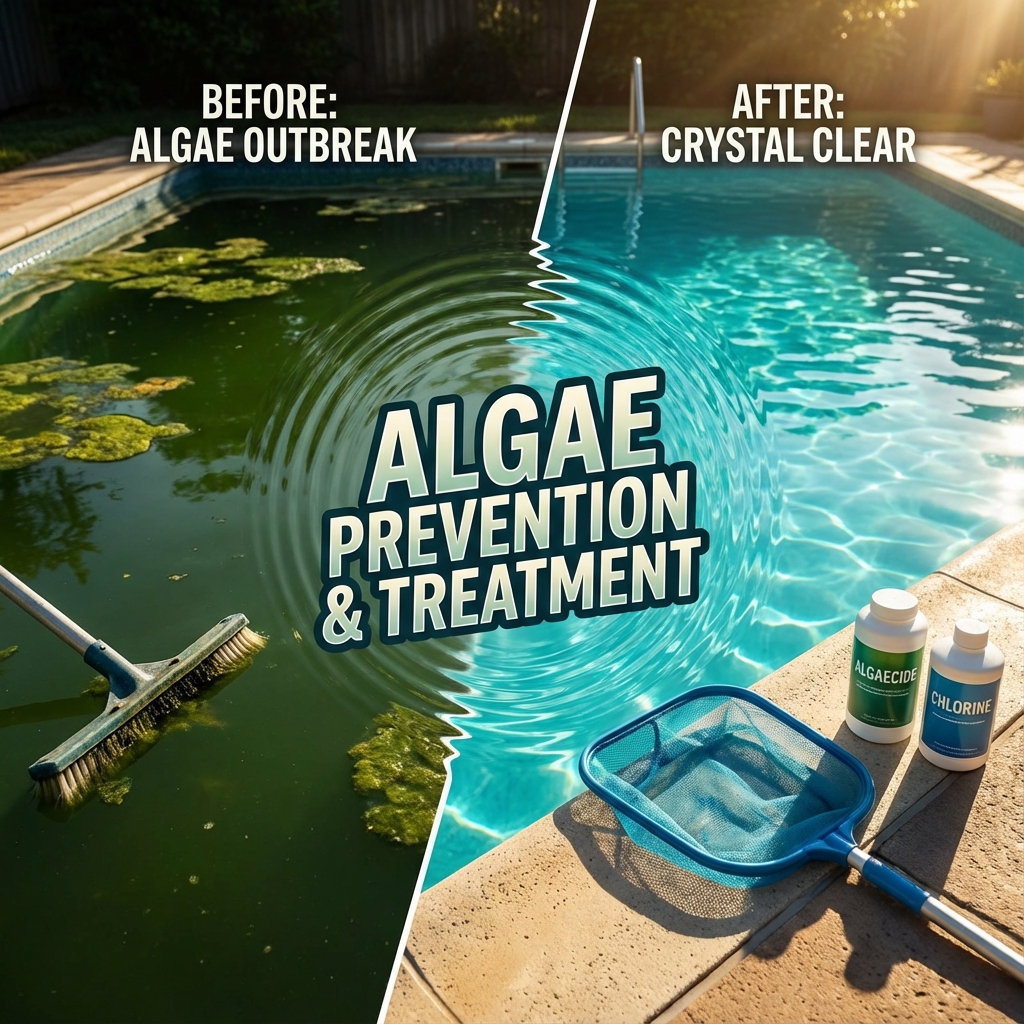
Few pool problems are as frustrating as algae. These microscopic aquatic organisms can turn a crystal-clear pool into a murky, green mess seemingly overnight. This comprehensive guide covers effective prevention strategies to keep algae at bay and proven treatment methods to eliminate it when it appears.
Understanding Pool Algae
Before diving into prevention and treatment, it's helpful to understand what you're dealing with:
Common Types of Pool Algae
Green Algae
- Most common type
- Forms floating or clinging green patches
- Can quickly turn entire pool green
- Relatively easy to treat compared to other types
Black/Blue-Green Algae
- Actually a cyanobacteria
- Forms black or dark blue spots on pool surfaces
- Extremely resistant to chlorine
- Can "root" into concrete surfaces
- Difficult to eliminate completely
Yellow/Mustard Algae
- Appears as yellow or tan powdery substance
- Often mistaken for dirt or sand
- Can return easily if not completely eradicated
- More chlorine-resistant than green algae
Pink Slime
- Not actually algae but a bacteria
- Forms pink slime in wet areas
- Common around fixtures, steps, and corners
- Requires specific treatment approach
Algae Prevention: The Best Strategy
Preventing algae is far easier than treating it. Follow these guidelines to maintain an algae-resistant pool:
Maintain Proper Water Chemistry
The foundation of algae prevention is proper water chemistry:
- Free chlorine level: Maintain 1-3 ppm consistently
- pH level: Keep between 7.2-7.6 for optimal chlorine efficiency
- Alkalinity: Maintain 80-120 ppm to prevent pH fluctuations
- Cyanuric acid (stabilizer): Keep between 30-50 ppm
- Test water 2-3 times weekly during swimming season
- Test more frequently during extreme heat, heavy use, or rainfall
Circulation and Filtration
Poor circulation creates dead spots where algae can flourish:
- Run pump and filter daily (8-12 hours minimum)
- Direct return jets to create circulation pattern without dead spots
- Clean skimmer and pump baskets weekly
- Backwash or clean filter when pressure increases by 8-10 psi
- Brush pool surfaces weekly to dislodge forming algae colonies
Regular Maintenance
Consistent maintenance prevents conditions favorable to algae:
- Shock the pool weekly during swimming season
- Use algaecide as preventative measure according to product directions
- Brush walls and floor thoroughly at least once weekly
- Vacuum debris promptly
- Clean waterline regularly to remove biofilm
Environmental Factors
External factors can contribute to algae growth:
- Remove overhanging branches that drop organic matter
- Keep lawn and garden products away from pool water
- Shower before swimming to remove lotions and oils
- Cover pool when not in use for extended periods
- Maintain proper water level for optimal skimmer function
Treating Existing Algae Blooms
Despite best prevention efforts, algae can sometimes appear. Here's how to handle different types:
Green Algae Treatment
- Test and balance water chemistry (pH, alkalinity) before treatment
- Brush all pool surfaces thoroughly to break up algae colonies
- Shock the pool with chlorine at 2-3 times normal shock level (follow product instructions)
- Add algaecide after shocking (usually 24 hours later) following product directions
- Run filtration system continuously until water clears
- Clean or backwash filter frequently during treatment
- Vacuum dead algae once water begins to clear
- Retest water chemistry and adjust as needed
- Continue normal shocking and algaecide until problem is completely resolved
Black Algae Treatment
Black algae requires a more aggressive approach:
- Brush affected areas vigorously with a stiff brush (steel brush for concrete pools)
- Apply chlorine tablets directly to affected spots (crush tablets for better contact)
- Shock at triple strength using quality calcium hypochlorite shock
- Use specialized black algaecide following package directions
- Continue brushing affected areas daily for at least a week
- Maintain high chlorine levels (3-5 ppm) during treatment period
- Consider acid washing for severe infestations in concrete pools (professional service)
- Preventative treatments after clearing to prevent return
Yellow/Mustard Algae Treatment
- Brush all affected areas thoroughly - yellow algae often returns if any traces remain
- Balance water chemistry with particular attention to pH
- Triple shock the pool preferably in evening hours
- Add mustard algae-specific algaecide after shocking
- Brush pool surfaces daily during treatment
- Clean or replace filter media as it may harbor algae spores
- Clean all pool toys, floats and equipment with chlorine solution
- Continue treatment until all traces are gone
Pink Slime Treatment
- Clean affected areas with a brush and chlorine-based cleaner
- Shock the pool at standard levels
- Add enzyme treatment to break down organic matter
- Check and clean filter system thoroughly
- Maintain slightly higher chlorine levels (2-4 ppm) temporarily
- Address water balance issues that may contribute to growth
Special Considerations
Salt Water Pools
- Saltwater systems may need supplemental chlorine during algae treatment
- Check salt cell for calcium buildup that may reduce effectiveness
- Consider boosting to "super chlorinate" mode during treatment
Vinyl Liner Pools
- Use algaecides safe for vinyl liners
- Avoid stiff brushes that could damage liner
- Be cautious with high chlorine levels for extended periods
Challenging Conditions
During these conditions, increase prevention measures:
- Extended heat waves: Run pump longer, test water more frequently
- Heavy rainfall: Test and balance water promptly after storms
- Construction nearby: Cover pool when possible, increase filtration
- Large swim parties: Shock after heavy pool use
When to Seek Professional Help
Consider professional assistance when:
- Algae returns repeatedly despite treatment
- Black algae persists after multiple treatment cycles
- You're unable to maintain proper water chemistry
- Pool surface has staining or damage from algae
- Filtration system is inadequate for pool size
Conclusion
Algae prevention through consistent maintenance and proper water chemistry is always the best strategy. When algae does appear, prompt identification and appropriate treatment will minimize downtime and expenses. Remember that different algae types require specific approaches, and persistence is key to completely eliminating an infestation.
By following these prevention and treatment guidelines, you'll be well-equipped to maintain a crystal-clear, algae-free pool that's always ready for swimming.
- Algae
- Water Treatment
- Pool Maintenance
- Water Chemistry